MORN. / MORNING
Backpacking Uzbekistan: a 7, 10 or 14-day itinerary on a budget
Choose a Silk Road backpacking route, compare the sleeper and high-speed trains, plan your hostel and sightseeing budget, and finish in Tashkent before heading to Kazakhstan.
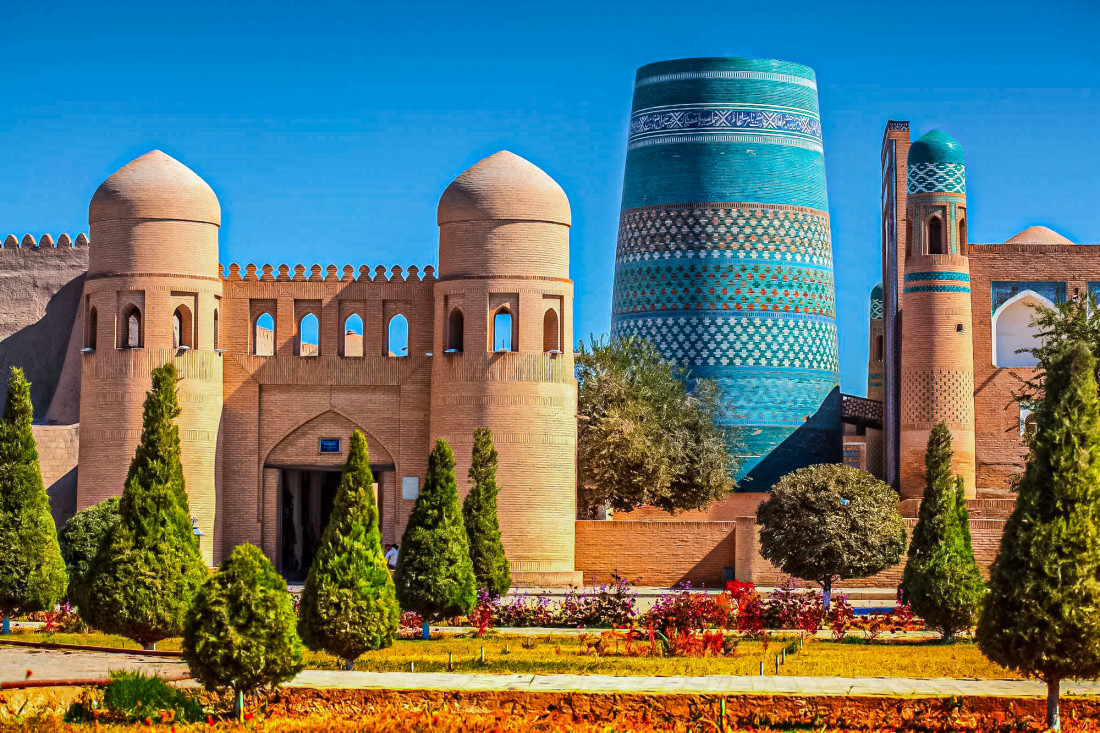
If Kazakhstan is your next country, plan your Uzbekistan trip so that you finish in Tashkent. With seven days, concentrate on Bukhara and Samarkand and skip Khiva. With ten days, use an overnight train to reach Khiva at the start, then travel east through Bukhara and Samarkand. Two weeks give you room for more time in each city without turning every second day into a transfer.
Uzbekistan has a useful rail network for independent travellers. A slower train can be considerably cheaper than the fastest one, and a bed on a sleeper replaces a night in a hostel. Admission tickets, tourist accommodation charges and occasional taxis still need their own budget. You do not have to buy a tour to travel between the four cities.
Choose your route before buying train tickets
| Time in Uzbekistan | Route | Nights | Best for |
|---|---|---|---|
| 7 days | Tashkent → Bukhara → Samarkand → Tashkent | 6 in accommodation | Lower budget and fewer long rides |
| 10 days | Tashkent → Khiva by sleeper → Bukhara → Samarkand → Tashkent | 8 in accommodation + 1 on train | All four cities, with one long journey at the start |
| 14 days | Tashkent → Khiva by sleeper → Bukhara → Samarkand → Tashkent | 12 in accommodation + 1 on train | More time for museums, hostel life and slower travel |
These include arrival and departure days within Uzbekistan. If you take an overnight train to Almaty on your last day, the following morning is the beginning of your time in Kazakhstan, not an extra sightseeing day in Uzbekistan.
Seven days: Tashkent, Bukhara and Samarkand
| Day | What to do | Sleep |
|---|---|---|
| 1 | Arrive in Tashkent; Chorsu Bazaar or a short city walk | Tashkent |
| 2 | Train Tashkent → Bukhara; Lyabi-Hauz and the old town | Bukhara |
| 3 | A full day at Poi Kalyan, the Ark and surrounding streets | Bukhara |
| 4 | Train Bukhara → Samarkand; Registan | Samarkand |
| 5 | Shah-i-Zinda, Bibi-Khanym and Siyob Bazaar | Samarkand |
| 6 | Train Samarkand → Tashkent; final city evening | Tashkent |
| 7 | Leave for Almaty or your next destination | — |
The longer initial Tashkent–Bukhara train ride is intentional. Once in Bukhara, the remaining intercity journeys bring you closer to your next country. A westbound trip ending in Khiva would add another long transfer before Almaty. On this shorter route, there is no need to squeeze Khiva into a single day.
Ten days: include Khiva without flying back across Uzbekistan
| Day | What to do | Sleep |
|---|---|---|
| 1 | Arrive early enough in Tashkent, then take the booked evening sleeper towards Khiva | On train |
| 2 | Reach Khiva, leave luggage and explore the walled town | Khiva |
| 3 | A full day inside Itchan Kala | Khiva |
| 4 | Train Khiva → Bukhara | Bukhara |
| 5 | Walk the historic centre and visit selected monuments | Bukhara |
| 6 | Train Bukhara → Samarkand | Samarkand |
| 7 | A full Samarkand sightseeing day | Samarkand |
| 8 | Train Samarkand → Tashkent | Tashkent |
| 9 | Tashkent: metro, bazaar, old and modern architecture | Tashkent |
| 10 | Travel onwards to Almaty | — |
This version requires a sleeper departure on Day 1 that you can comfortably reach. If your international flight arrives late or no suitable sleeper runs that evening, do not gamble on a connection. Give yourself another night in the capital and shorten a city stay, or choose the fourteen-day plan. If you arrive in Urgench instead, use Khiva as your first base and move east from there; there is no reason to go to Tashkent first.
Fourteen days: spend less time rushing between monuments
| Days | Plan | Nights |
|---|---|---|
| 1 | Arrival in Tashkent | 1 |
| 2 | Capital sightseeing and the evening sleeper, if scheduled | 1 on train |
| 3–5 | Khiva: arrival, old town and an extra uncommitted day | 3 |
| 6–8 | Bukhara: arrival, historic centre and a slower day | 3 |
| 9–11 | Samarkand: arrival and two full days | 3 |
| 12–13 | Tashkent: return and one full day before departure | 2 |
| 14 | Leave Uzbekistan for Kazakhstan | 0 |
The additional days are useful even without expensive excursions. You can wait for a cheaper train on a different day, spend an evening with other travellers, or revisit a city rather than make a rushed trip to another region. If you use the spare time for the desert fortresses outside Khiva or a trip from Samarkand, arrange the outward and return journey together. These are not urban metro stops.
A solo traveller reporting in September 2026 spent thirteen days in Uzbekistan before moving on to Turkmenistan. They particularly enjoyed the communal spaces at their hostels in Samarkand and Bukhara. They also found that finding people to share the cost of an outing from Khiva was harder than expected. A long trip gives you time to meet people; it does not guarantee that a group will form.
How much to budget for backpacking Uzbekistan
Start with a working amount for each expense rather than multiplying a headline daily budget by the number of days. The following are planning allowances for one person, in Uzbek som (UZS), not live quotes. They assume dorms or inexpensive accommodation, local meals, trains rather than private intercity cars, and a selection of paid sights. The two longer plans include one sleeper, counted under trains, not accommodation.
| Expense | 7 days | 10 days | 14 days |
|---|---|---|---|
| Accommodation, including allowance for tourist charges | 720,000–1,080,000 | 960,000–1,440,000 | 1,440,000–2,160,000 |
| Meals and water | 630,000–1,050,000 | 900,000–1,500,000 | 1,260,000–2,100,000 |
| City transport | 140,000–315,000 | 200,000–450,000 | 280,000–630,000 |
| Intercity trains | 550,000–850,000 | 850,000–1,300,000 | 850,000–1,300,000 |
| Sightseeing | 350,000–650,000 | 500,000–900,000 | 650,000–1,100,000 |
| SIM, laundry and small expenses | 150,000–300,000 | 200,000–350,000 | 250,000–500,000 |
| Total allowance | 2,540,000–4,245,000 | 3,610,000–5,940,000 | 4,730,000–7,790,000 |
This is a deliberately modest budget model, not an average of all tourists' spending. The accommodation allowance is 120,000–180,000 UZS per land night, food and water 90,000–150,000 UZS per day, and city transport 20,000–45,000 UZS per day. The train and entrance-fee lines are reserves for each proposed route. The lowest end requires the cheaper choices actually to be available. If an actual accommodation, rail or museum price exceeds its allowance, add the difference to the total. A private room every night, expensive museums, private day excursions and faster trains will push the total higher. International transport to and from Uzbekistan, visa fees, insurance and optional major side trips are not included.
What independent travellers actually spent
In a March 2026 discussion, a visitor from the United States who had visited the four main cities reported dorm beds at around US$10, inexpensive meals at about US$5, intercity train rides at US$16–30 for the cheaper options, and short ride-hailing journeys from railway stations at US$1–2. These were their own rough observations, not guaranteed tariffs.
A backpacker who published a ten-day trip report in April 2025 also put accommodation near US$10 a night, but said food had been one of their biggest expenses, despite the availability of cheap local meals. The lesson is not that every day costs US$20: the longer railway journeys and paid sites arrive as separate, larger expenses.
An August 2026 solo trip report by the Japanese traveller nori records a real combination of Afrosiyob, Sharq and Jaloliddin Manguberdi trains, plus a domestic flight back from Urgench. The author recorded 37,165 yen for food and 10,387 yen for sightseeing, illustrating a substantially different travel style from dorm-and-bazaar budgeting. The reported total included international flights; it is not comparable to the ground-only budget above.
Booking trains: where the biggest savings are
Buy domestic tickets through the official Uzbekistan Railways booking site. Search for the cities and the actual dates of your itinerary, and compare all train types before selecting a fare. The fast Afrosiyob is useful when you only have one full day in a city; Sharq or a slower train can cost less. A sleeper has an open sleeping carriage (platskart) or enclosed compartments (kupe), priced per berth rather than for an entire compartment.
The independent railway reference The Man in Seat 61 published these one-way, per-person fare examples in its November 2026 guide:
| Route from Tashkent | Faster economy option | Lower-cost option |
|---|---|---|
| Tashkent → Samarkand | Afrosiyob 311,000 UZS | Sharq/Nasaf second class 200,060 UZS |
| Tashkent → Bukhara | Afrosiyob 509,000 UZS | Sharq second class 276,820 UZS |
| Tashkent → Khiva | Manguberdi 780,000 UZS | Sleeper platskart 245,140 UZS |
The Khiva example saves 534,860 UZS on the fare alone if the cheaper berth is available, in exchange for a substantially longer ride. The sleeper also replaces one night of accommodation. These are published reference prices for the direction shown, not live quotes for the return legs. Do not assume a faster train is the most economical way to reach every city.
Tashkent to Khiva: buy the night train first
The published railway timetable lists the 056 service from Tashkent at 21:24, reaching Khiva at 12:02 the following day, on Tuesdays, Wednesdays, Fridays and Saturdays. It also lists a Monday 076 departure at 22:48 with arrival at 13:38 the next day. The current booking search is the authority for your actual date and departure station. Overnight Khiva trains may leave Tashkent South Railway Station, not Tashkent Central/North. Follow the station on your issued ticket.
If you choose the faster Jaloliddin Manguberdi, its launch in May 2026 cut the scheduled full journey to about seven and a half hours. It is a different train from the overnight sleeper; do not assume it runs on all dates or costs the same. For those arriving by air in Urgench, the Khiva city government's September 2026 announcement lists train 7055 from Urgench Airport at 08:40 to Khiva at 09:22 for 25,000 UZS per adult. The reverse 7058 leaves Khiva at 21:00. These are published service examples, not an all-day shuttle. If your flight lands later, you need another confirmed departure or a road transfer.
Khiva to Bukhara: an extra train makes the eastbound route easier
The Uzbekistan Tourism Committee announced new electric trains from 9 September 2026. Its eastbound train 707 was scheduled to leave Khiva at 09:55, reach Bukhara-1 at 14:32, and operate every day except Tuesday. Train 706 runs in the opposite direction, so do not select it by mistake. The 707 journey is under five hours in the announced timetable; search the current ticket system for the fare and seats.
Bukhara-1 railway station is in Kagan, outside the historic centre. Save Bukhara railway station in Kagan and your accommodation's actual address separately. A ticket to Bukhara does not mean the train drops you beside Lyabi-Hauz. For Bukhara → Samarkand and Samarkand → Tashkent, select the direct eastbound journeys in the official system. The operator's published Afrosiyob timetable includes a Samarkand-to-Tashkent service around two and a half hours; slower trains and other dates have different times.
When the cheap seats disappear
An October 2026 passenger reported paying US$250 for four tickets through an agent after seeing no seats available for Samarkand → Bukhara. The face value, according to the traveller, was US$185. Later, more seats appeared in the official system. The account does not establish a universal timetable for releasing extra seats. If your preferred train sells out, look at other services and dates before paying a markup. A confirmed slower train is better than a hoped-for seat on the day you need to travel.
Use the passenger details from your actual passport, confirm that a ticket has been issued after payment, and save the ticket offline. If a payment is charged without an issued booking, establish its status before paying again. Read the ticket instructions to see whether a printout or collection is required. Domestic Uzbek rail boarding and an international Kazakhstan train do not necessarily have identical documentation rules.
Where to sleep: keep the station journey and the bed price separate
In Khiva and Bukhara, staying near the old town reduces the need to pay for transport between sights. In Samarkand, choose a base between the historic monuments rather than selecting a property solely because it is near the railway station. In Tashkent, the best location depends on which station you need at the end of the trip: see where to stay before going to Almaty.
The September 2026 solo report mentioned above names Old Radio Hostel in Samarkand and Dervish Hostel in Bukhara for their social common spaces. These are useful accommodation candidates, not an endorsement of every service they offer. Old Radio, Bibikhonim Street 15, second dead-end lane is in the old-town area; a local directory lists a small mixed dorm. Dervish, 11 Quyi Darakht Street is listed near the historic centre, with male, female and mixed dorms. Current bed prices, availability, payment methods and WhatsApp numbers were not established; use the property listing or the map's contact details for your dates. Ask for the total including the tourist levy and whether registration is provided.
A cheap listing can exclude a local charge. The same September traveller described a hostel quoting a price in dollars, then converting it at an unfavourable exchange rate; the amount was revised after they challenged it. Agree the final amount in UZS and whether tax is included before paying. The Central Bank of Uzbekistan's exchange rates provide a reference, not a guarantee of the exchange office's retail rate.
For registration, the Uzbek government guidance for foreign visitors explains the place-of-stay requirement and the accommodation provider's responsibility. The Tourism Committee also reminded accommodation businesses on 12 November 2026 that certification is compulsory for establishments including hostels and guesthouses. Choose accommodation that can register your stay, ask for confirmation and retain it throughout the trip. Keep your overnight train tickets with your accommodation records. Do not assume that an informal overnight arrangement or an unregistered private room is equivalent to staying at a registered hostel.
Where to spend your sightseeing budget
Khiva: start at the West Gate of Itchan Kala (Ota Darvoza) and walk towards the turquoise Kalta Minor. The UNESCO-listed walled town concentrates much of the city's historic architecture within a compact area. At the gate, ask which interiors your ticket includes, how long it remains valid and which towers or mausoleums cost extra. The museum-reserve's ticket listing is the starting point; a current adult foreigner price and multi-entry conditions could not be established from its accessible text. Do not use the resident ticket price for a foreign visitor's budget. Two nights give you both an evening and a morning in the old town.
Bukhara: the Poi Kalyan ensemble, Ark fortress and Lyabi-Hauz form a good walking circuit. Choose the interiors and museums you are most interested in rather than buying a ticket at every building. Much of the experience of the UNESCO historic city is its streets and public spaces.
Samarkand: give your first paid visit to the Registan if Timurid architecture is your main reason for coming. A local information directory publishes 100,000 UZS for an adult foreign visitor; see the Registan ticket system for your own date and conditions. The amount is an indicative published reference, not a verified checkout price. Reserve separate time and money for Shah-i-Zinda and Gur-e-Amir. Siyob Bazaar and the streets between the monuments make useful free outdoor stops. The UNESCO description of Samarkand provides context for the buildings.
Tashkent: save a full day for Chorsu, the historic religious district and the decorated metro if the route permits. Metro journeys and outdoor modernist architecture can keep costs down. If the Islamic Civilization Center is your main interest, set aside a separate museum budget: the adult foreign-visitor ticket costs substantially more than an ordinary metro or bazaar outing. See what to do in Tashkent in one to three days for the individual ticket options, the relocated Uthman Qur'an and the city's other museums.
Winter, heat and the last day in Uzbekistan
A solo visitor describing a January 2026 trip encountered sleet and snowfall in Samarkand and found many Bukhara bazaar shops closed in the low season. They still enjoyed the architecture. In winter, fewer long outdoor days and accommodation with reliable heating matter more than fitting every monument into the itinerary. Spring and autumn often offer more comfortable walking weather; in summer, put long outdoor visits in the cooler parts of the day.
Keep the final night in Tashkent even if you have already explored the city at the beginning. You can deal with a changed train, collect luggage or resolve a ticket problem without missing the next international departure. Check the visa rules for your nationality before crossing. The official Uzbek e-visa portal is separate from the Kazakhstan entry system.
From Uzbekistan to Almaty: keep your next leg simple
Mountain routes from Almaty · Edited by Askar Bakeev Kazakhstan law · Reviewed by legal consultant Guliya AitbayevaThe Kazakhstan Railways announcement of 27 August 2026 published daily Tashkent-to-Almaty train service, leaving at 14:41 and arriving at 08:51 the next day. That is just over eighteen hours. It also announced a women's carriage from 1 October 2026; look for the ЖН designation if that option suits you. Search KTZ's official ticket site for your date, berth and boarding conditions.
If your time is more valuable than the cost of an overnight train, compare the direct flight. There is also a coach option. The Tashkent → Almaty transport guide compares these routes and explains the separate stations, ticket rules and arrival in Kazakhstan. If you are not finishing in Tashkent, use the Samarkand, Bukhara and Khiva to Almaty guide instead. The Kazakhstan visa regime table and electronic-visa rules matter before buying a land-crossing ticket: Kazakhstan's e-visa is for international-airport entry, not the overland route.
If you have a further week, the seasonal Almaty travel guides compare travel styles and trip lengths before you choose mountain outings. The Almaty hostels guide and local bus and metro guide are useful for the first day. For a mountain day with no rental car, compare nature trips from Almaty without your own car or a scheduled group trip to Kolsai and Kaindy. This keeps the Uzbek budget separate from your actual days and choices in Kazakhstan.