MORN. / MORNING
What Is Baikonur? Gagarin, the Space Race and Kazakhstan’s Spaceport
A secret missile range became the starting point of human spaceflight. Gagarin’s journey, the Cold War race and the spaceport that grew around them.
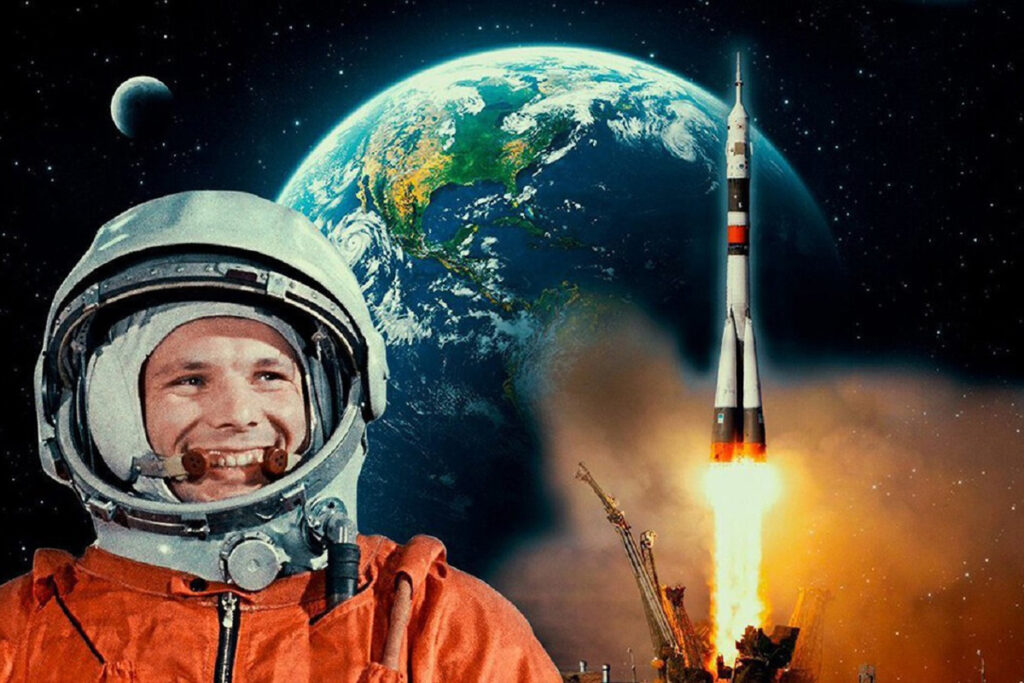
Baikonur is the place in Kazakhstan where humanity first sent a satellite, and then a person, into orbit. Its Cold War history survives in launch pads, assembly buildings and the railway tracks used to carry rockets to their launch sites. Behind Gagarin’s famous departure lies an entire complex: a secret military test range, the city that grew beside it and a spaceport that is still working.
Why a spaceport appeared in the Kazakh steppe
On 12 February 1955, the Soviet Council of Ministers approved a test range near Tyuratam railway station in the Kazakh Soviet Socialist Republic. The future Baikonur was built to test Sergei Korolev’s R-7 intercontinental ballistic missile. Its official designation was Scientific Research Test Range No. 5, or NIIP-5.
This was the era of confrontation between the Soviet Union and the United States. A rocket capable of crossing continents had military significance; developing that technology also opened a route into space. Baikonur served both ambitions. Launch pads needed assembly and testing buildings, communications, roads and accommodation for the people operating the machinery.
Even the name concealed something. Soviet authorities borrowed the name of a distant mining settlement, Baikonur, to disguise the complex’s actual position near Tyuratam. The spaceport’s historical name, the present-day city of Baikonur and Tyuratam station are therefore connected, but they do not mark a single place on a map.
From the R-7 to the first satellite
The first R-7 test launch from Site 1 took place on 15 May 1957. On 4 October that year, the same site sent Sputnik 1 into orbit: the first artificial satellite of Earth. Military rocket technology had acquired an application visible far beyond the test range. A human-made object was circling the planet.
The launch was both an engineering achievement and a political event. During the Cold War, success in space was treated as evidence of a country’s scientific and technical strength. The next question was no longer simply whether a machine could reach orbit, but whether a person could survive the journey and return.
How Gagarin was selected and trained
Yuri Gagarin entered the space programme as a fighter pilot. The first Soviet cosmonaut group comprised 20 pilots who had passed medical and psychological selection. Six were chosen for more intensive Vostok preparation; the candidates for the first flight were then selected from that group.
Training covered spacecraft systems, physical conditioning, parachute jumps, centrifuge sessions and weightlessness aboard an aircraft. These skills mattered to the return journey: the cosmonaut had to withstand acceleration and be able to land separately from the capsule. Gherman Titov became Gagarin’s backup.
On launch morning, technicians discovered that the hatch had not sealed properly and had to open and secure it again. While they worked, Gagarin asked for music over the radio. Half an hour before liftoff, his pulse was recorded at 64 beats per minute, a detail preserved in the account of the preparations.
12 April 1961: one circuit of Earth
Vostok 1 lifted off from Site 1 at 09:07 Moscow time — 06:07 UTC. Gagarin called out “Poyekhali!” — “Let’s go!” — and became the first human in space. He completed one circuit of Earth; the flight’s duration is generally given as 108 minutes.
His early reports were practical: how he felt, whether the equipment worked and what he could see of Earth. The flight was largely automatic. Gagarin observed the planet through the windows and transmitted instrument readings as the spacecraft travelled beyond the reach of successive ground stations.
The return did not go perfectly. After the braking manoeuvre, wires briefly kept the descent capsule attached to the equipment module, and the spacecraft began to tumble. The connection broke during atmospheric reentry, allowing the capsule to separate. Gagarin remained conscious despite experiencing approximately 8g.
At an altitude of about 7 km, he ejected and descended under his own parachute, landing in the Saratov region. Baikonur was the point of departure; the historic journey ended far from the cosmodrome.
How the flight changed the space race
The first person in orbit became a symbol of Soviet achievement, but the event’s importance extended beyond competition between two states. On 12 April, US President John F. Kennedy congratulated Nikita Khrushchev and the Soviet scientists and engineers, expressing hope for peaceful cooperation in exploring space.
The contest continued. On 5 May 1961, 23 days after Gagarin, Alan Shepard became the first American in space aboard Freedom 7. His flight was suborbital: he reached space and returned without circling Earth. On 20 February 1962, John Glenn became the first American to orbit Earth, completing three circuits aboard Friendship 7.
Between those flights, on 25 May 1961, Kennedy set the goal of landing a person on the Moon and returning them safely before the decade ended. Competition over the first minutes and orbits in space had become a much larger race to the Moon.
Baikonur continued to produce new milestones. On 16 June 1963, Valentina Tereshkova launched from here aboard Vostok 6 and became the first woman in space, more than two years after Gagarin’s flight.
A history that includes more than triumphs
On 24 October 1960, less than six months before Gagarin flew, a catastrophe struck during preparations for an R-16 missile launch at Baikonur. The second-stage engine ignited prematurely while the missile stood on the pad. Military personnel and specialists were killed, including Marshal Mitrofan Nedelin.
The disaster was kept secret. It exposes another side of the space age: dangerous tests and people working beside fuelled rockets lay behind the records. Baikonur’s history cannot be understood only through ceremonial pictures of successful launches.
Why Baikonur is in Kazakhstan but associated with Russia
After the Soviet Union dissolved, the complex lay within independent Kazakhstan. Kazakhstan and Russia signed the lease on 10 December 1994. A 2004 agreement extended it to 2050; the lease sets annual rent at US$115 million. The complex includes the cosmodrome and the city formerly called Leninsk.
The lease explains Russia’s role in operating the facilities; Baikonur’s geographical location remains Kazakhstan. The city sustains life around the spaceport, with residential neighbourhoods, schools, hospitals, hotels and a museum. It is much more than a launch pad visited on the day a rocket flies.
International relationships around Baikonur have changed too. Mixed crews have departed for the International Space Station, including NASA and ESA astronauts. A place that became a symbol of the Cold War also became part of collaborative work in space.
What survives from the first launch, and what operates today?
Gagarin’s Start is Site 1. Its last launch took place on 25 September 2019. This is the site associated with Sputnik 1 and Vostok 1; watching a present-day Soyuz launch in the featured programmes involves a different location, Site 31.
The cosmodrome also continues to develop beyond those two pads. The joint Kazakh–Russian Baiterek complex is designed for the Soyuz-5/Sunkar rocket. Its first test launch from Site 45 took place on 30 April 2026. It is a separate project from the historic Gagarin’s Start.
Different parts of the complex reveal different eras. The memorial museum at Site 2 includes a Buran exhibit and the houses associated with Gagarin and Korolev. The city museum is separate. Railway tracks and assembly buildings show another side of the spaceport: before a rocket rises into the sky, it must be assembled, tested and transported to its launch pad.
From the history to a visit
A visit can combine the city, historic cosmodrome facilities and launch viewing; the places included depend on the programme. The six-day trip also includes the rocket’s railway rollout and erection on the launch pad. Museums and launch locations are distinct parts of an itinerary.
Access arrangements, documents, the journey via Kyzylorda and a comparison of three-, four- and six-day trips are covered in How to Visit Baikonur and Watch a Rocket Launch. After an enquiry, a guide contacts you to explain the chosen programme, accommodation and meeting arrangements.