MORN. / MORNING
Uzbekistan–Kazakhstan border crossings: which one can tourists use?
Which checkpoints admit international passengers, how the reopened Chernyaevka crossing changes the route from Tashkent, and what to expect before travelling to Almaty.
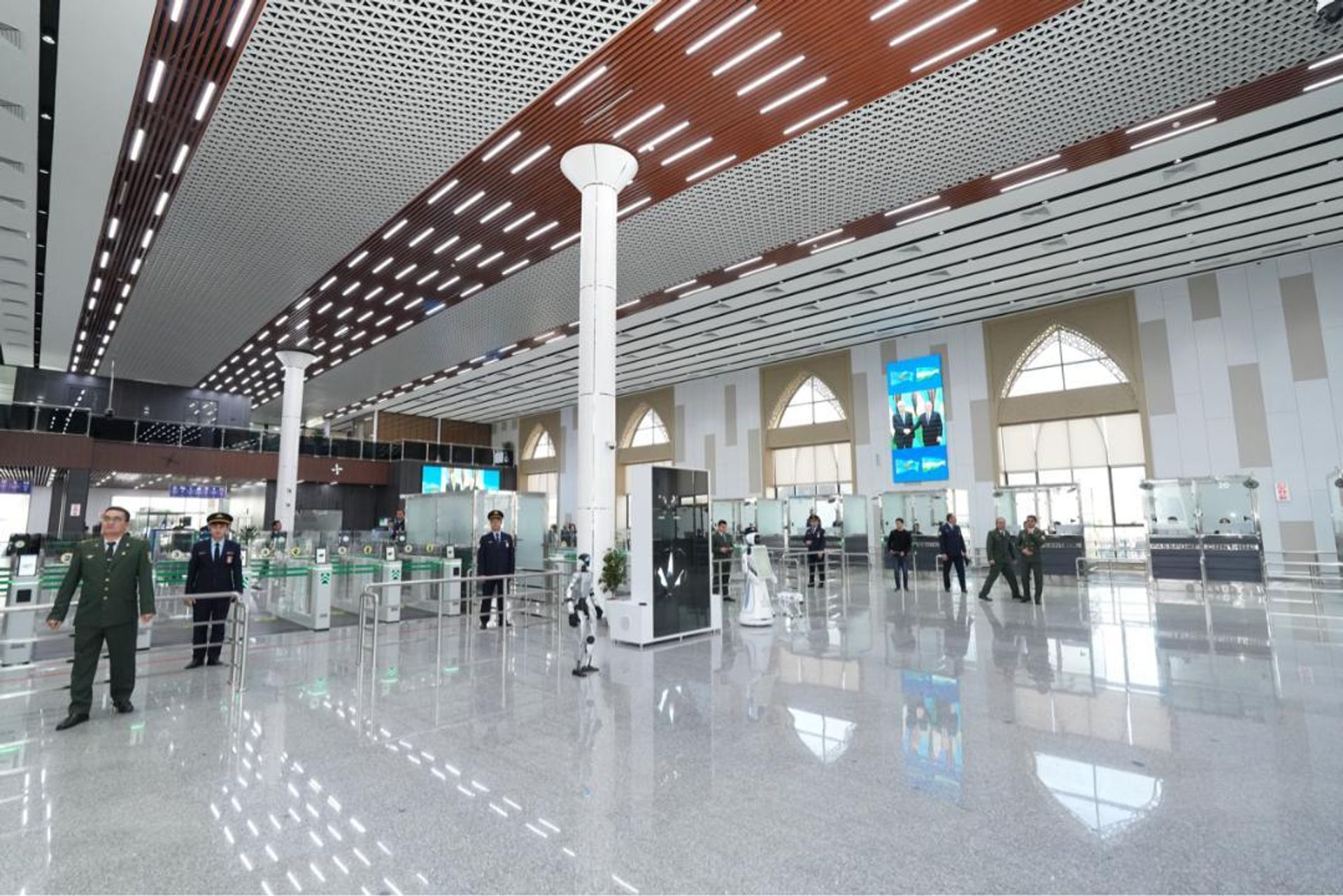
The main road crossing from Tashkent towards Shymkent reopened on 25 November 2026. It is called Gisht Kuprik, or Chernyaevka, in Uzbekistan and Zhibek Zholy in Kazakhstan. Pedestrians, passenger cars and buses can use the reopened crossing. Navoi–Kaplanbek, which carried passengers during the closure, is an alternative.
If you are coming from Nukus or the Aral Sea region, the situation is different: the western road crossing at Daut Ata–Tazhen has not been confirmed as reopened for passengers. The railway through Karakalpakstan to Beyneu is a separate route. And if you only want to reach Almaty from Tashkent, a direct international train avoids the need to arrange transport on both sides of a road border.
Choose the crossing for your route
| Where you are going | Crossing or connection | Passenger considerations |
|---|---|---|
| Tashkent → Shymkent | Gisht Kuprik–Zhibek Zholy | Reopened on 25 Nov 2026; walking, passenger cars and buses |
| Tashkent → Shymkent, alternative | Navoi–Kaplanbek | Established passenger route used during reconstruction |
| Tashkent → Almaty, without changing road vehicles | Direct train through Keles–Saryagash | Book the international train; railway checks, not the road crossing |
| From Chinaz or south of Tashkent | Yallama–B. Konysbayev | Possible road alternative; a longer route from central Tashkent |
| From Gulistan or the Syrdarya region | Gulistan–Atameken | International road checkpoint; arrange transport for both sides |
| From Nukus or Kungrad towards western Kazakhstan | Train via Karakalpakstan–Oazis, onward to Beyneu | Passenger train; western road access remains unconfirmed |
Uzbekistan and Kazakhstan both use UTC+5. Your clock does not need to change when you cross. For a day trip to Shymkent from Tashkent, the time spent returning through the border matters just as much as the outward crossing. If you intend to spend several days in Kazakhstan, choose a later onward departure or stay in Shymkent rather than making a tight, separately ticketed connection.
What are the names of all the road crossings?
The checkpoint has a different name in each country. Use the name on your side of the border when requesting a ride. Two important distinctions are legal eligibility for international visitors and the actual operating arrangements for your type of transport.
Article 2 of the 2001 agreement on border checkpoints provides for crossing by vehicle or on foot at road posts. The checkpoint protocol and its amendment ratified by Kazakhstan on 9 July 2026 list the designated international crossings and operating hours. International (multilateral) status permits travellers of third-country nationalities to use a checkpoint, subject to their entry documents and its operating restrictions. It does not mean every vehicle is accepted or that a passenger service exists.
| Uzbekistan | Kazakhstan | What to know before choosing it |
|---|---|---|
| Gisht Kuprik (Chernyaevka) | Zhibek Zholy | Main passenger crossing; reopened 25 November; designated 24-hour international |
| Navoi / Zangiota | Kaplanbek | International, designated 24-hour; established pedestrian/car/bus alternative |
| Yallama | B. Konysbayev (Konysbayeva) | International, designated 24-hour; used for both passenger and freight movements |
| Tashkent customs post (S. Najimov) | Kazygurt | International designation; current admission arrangements for pedestrians and ordinary passenger cars not established |
| Gulistan | Atameken | International road checkpoint; QazETA initial rollout began here on 1 November 2026 |
| Oq Oltin (Ok Oltin) | Tselinny | Listed as international/24-hour in the amendment ratified in 2026; third-country admission still needs confirmation; specific vehicle restrictions |
| Malik | Syrdarya | Same legal-status uncertainty; specific vehicle restrictions |
| Daut Ata (Dovut-ota) | Tazhen (Tejen) | International road post; passenger reopening not confirmed; separate railway route is available |
The names Zangiota in the protocol and Navoi in operational notices refer to the Uzbek counterpart of Kaplanbek. The name Tashkent in the legal list refers to the post paired with Kazygurt, not to Tashkent's international railway station. Use the full checkpoint pair rather than searching for a city alone.
Why not choose the smallest crossing to avoid queues?
Two posts deserve particular attention: Tselinny–Oq Oltin and Syrdarya–Malik. The amendment ratified in 2026 gives them international status and round-the-clock operating hours, but the national checkpoint list published by Kazakhstan's Border Service still places them in the bilateral category, reserved for the citizens of the two countries. The amendment specifies passenger cars and empty trucks at both posts, with a separate provision for certain oversized or heavy freight at Tselinny. The date on which both governments completed the notification procedure required by the protocol, and actual admission of a visitor with a third-country passport at these two posts, have not been established here.
If your route depends on one of these smaller checkpoints, call the Kazakhstan Border Service's border-crossing enquiries number, +7 7172 99 00 99. Ask whether the post admits your nationality in your actual mode of transport, including on foot if applicable, and whether there are temporary restrictions. Use Zhibek Zholy or Kaplanbek instead if that admission cannot be established. The Uzbek government's contact directory gives the Customs Committee's local short number, 1108. Its international contact is +998 71 203 31 71, as listed in the government hotline directory.
Gisht Kuprik–Zhibek Zholy: the reopened Chernyaevka crossing
The Kazakhstan Ministry of Finance's announcement of 25 November 2026 confirms the opening of the modernised facility. The Uzbek Customs Committee announcement reported by Spot confirms movement in both directions from 16:00 that day, after the closure that began on 5 February 2025.
The rebuilt crossing is designed for passenger traffic. On the Uzbek side, the number of pedestrian lanes has doubled to eight and vehicle inspection lanes have increased to 18. On the Kazakh side, the two passenger terminals separate entry and exit. Authorities describe a peak processing capacity of up to 100,000 people per day. That is a design capacity, not an observed waiting time for a tourist.
If you travel by scheduled international bus: on 25 November, the Uzbek Ministry of Transport announced a separate corridor for international buses leaving Tashkent Bus Station, intended to reduce general-queue delays at Gisht Kuprik. The announcement as reported by Anhor does not waive passenger passport or customs checks and does not guarantee a journey time. Book your actual route through the bus ticket system. The departure point is Tashkent Bus Station, 7 Bunyodkor Avenue, beside Olmazor metro. Ask which crossing that particular departure uses. Do not assume a new direct Tashkent–Shymkent bus has been introduced merely because the checkpoint reopened.
If you cross on foot: arrange a ride to the Uzbek Gisht Kuprik checkpoint, complete both countries' controls and then arrange transport from the Kazakh side to Shymkent or your next stop. Do not book an onward taxi from the wrong country's checkpoint. Newly observed taxi fares, pickup arrangements and actual crossing times after 25 November are not yet established.
For the through bus and direct train, see the Tashkent to Almaty guide. It gives the separate departure stations and ticket links for the onward journey. A road transfer into Shymkent is only one of those options.
Navoi–Kaplanbek: what travellers actually experienced
During the reconstruction of Chernyaevka, Kaplanbek was the principal practical alternative for passengers. The Kazakh State Revenue Committee's January 2025 opening notice covers pedestrians, passenger cars and buses. The reopening of Gisht Kuprik does not establish that every coach has switched to the new crossing.
On 30 September 2026, a European traveller described completing a weekday day trip from Tashkent to Shymkent through Navoi–Kaplanbek. They reached the checkpoint at about 07:40 and crossed into Kazakhstan roughly 20 minutes later. On the Kazakh side the traveller was offered a shared ride towards Shymkent for 5,000 KZT a seat, or 20,000 KZT for the whole car. There was no available Yandex ride at the border in their account. The return crossing in the late afternoon took about 15 minutes, after a road journey from Shymkent of roughly two hours. Read the traveller's report.
That trip is a useful example of what can work. It is not a current taxi tariff, a reliable prediction of your wait, or a reason to assume the newly opened Chernyaevka crossing will take the same time. On 9 May 2026 the Kazakh Border Service reported a queue at Kaplanbek caused by a registration-system problem on the Uzbek side, even though the Kazakh post was operating normally. An open checkpoint can still have a long delay.
Reports of requests for money and missing cash
Crossing time is not the only concern reported by passengers. The following dated accounts describe allegations at Kaplanbek during 2025, while the main Chernyaevka crossing was closed:
- A review posted on 3 November describes a crossing on 2 November 2025 in which the traveller said 15,000 Russian roubles disappeared from their wallet during document and money checks. Original review.
- A reviewer writing on 12 September 2025 reported being asked to put cash on a table near the X-ray inspection area and then finding 5,000 roubles missing. Original review.
- A motorist's 4 October 2025 review alleges that staff asked for 1,000 roubles to avoid inspecting the car. Original review.
These are individual allegations, not adjudicated findings or standard fees. They concern Kaplanbek, not the reopened Zhibek Zholy. The rapid 2026 crossing described above and these negative experiences are both relevant to the choice between separate road rides and a through train. Do not pay unofficial fees to avoid a lawful inspection or to obtain a passport stamp. If a charge is requested, ask what it covers and for the official tariff and receipt. Comply with lawful customs declarations and inspections, keep your receipts and declaration copies, and record the date, post, direction and circumstances of any incident afterwards if it is safe to do so. Do not photograph restricted areas.
For a suspected offence or missing money, the Kazakh Border Service lists a trust line, +7 7172 99 00 69, and the Kazakh anti-corruption service lists 1424. On the Uzbek side, the government contact directory lists customs at 1108 and the Anti-Corruption Agency at 1253. Short numbers are for the respective local network; connection or English-language service has not been established. If you need consular assistance, contact your own embassy. There is no basis for treating any payment described in a review as a legal border fee.
Yallama, Kazygurt and Atameken: when an alternative makes sense
Yallama–B. Konysbayev is a reasonable crossing to investigate if you are already south of Tashkent, around Chinaz, rather than in the capital. The February 2025 State Revenue Committee notice explicitly included B. Konysbayev among the pedestrian alternatives during the Chernyaevka closure. On 21 November 2026, Spot reported official figures showing 100 trucks queued there on the previous morning. A freight queue does not establish the length of a pedestrian queue, and there is no reliable current passenger-fare comparison with Kaplanbek. Confirm the ride from the checkpoint to your actual destination before committing to this alternative.
Kazygurt is paired with the Uzbek Tashkent post; older operational notices use the name S. Najimov. The same 2025 diversion notice specifically listed Kazygurt for freight movements, not among its pedestrian alternatives. Do not interpret its multilateral designation as confirmation of ordinary-car or pedestrian service today. Use the Border Service enquiry number before arranging this route.
Atameken–Gulistan is in the Syrdarya-region corridor rather than the direct road north from Tashkent. If you are travelling from Gulistan, check it as an international crossing rather than returning to the capital automatically. However, a suitable passenger service and your mode of crossing should be established first. Atameken is also one of the four road posts where Kazakhstan began introducing QazETA on 1 November 2026.
Tazhen–Daut Ata: entering western Kazakhstan from Nukus
This road post is on the route from Karakalpakstan towards Beyneu. Passenger access was suspended on 1 February 2025 for reconstruction. A Kazakh State Revenue Committee statement dated 29 December 2025 explained that trucks continued using Tazhen, while works on the Uzbek counterpart restricted passenger traffic. On 21 November 2026, Spot reported that Uzbek Customs expected reopening in December. No subsequent official confirmation of a passenger reopening has been established as of 26 November. Do not interpret freight operations, completion of one side's reconstruction, or the November opening of Chernyaevka as evidence you can cross here by car or on foot.
If you are coming from Nukus, Kungrad or Muynak, use the passenger railway towards Beyneu or Mangystau, not the unconfirmed road crossing. Kazakhstan Railways' service list identifies international trains from Nukus and Urgench towards western Kazakhstan. Search your departure and destination on Uzbekistan Railways. If you continue to the Caspian coast, the Aktau to Almaty train guide explains the onward departure from Mangystau railway station rather than central Aktau.
What changes if you cross by train?
The railway crossings are different from the road posts. The checkpoint list names Keles–Saryagash in the east and Karakalpakstan–Oazis in the west. Beyneu is a useful passenger station in Kazakhstan for changing trains after western border procedures. It is not another name for the Tazhen road crossing. The legal list also names the Maktaaral–Syrdarya railway pair; no regular international passenger service using it has been established for this guide.
The direct Tashkent–Almaty train uses the eastern railway corridor; international trains from Nukus towards Beyneu and Mangystau use the western one. Border checks take place as part of the train journey. Keep your passport and documents available and follow the instructions of the train staff and officials. Do not leave the train at an intermediate border station to look for a road taxi. Book the relevant train through KTZ or Uzbekistan Railways. Both the rail and road routes are land entry into Kazakhstan.
Entry documents: passport, visa and QazETA
Kazakhstan law · Reviewed by legal consultant Guliya AitbayevaBefore buying a land ticket, look up your passport in the Kazakhstan Ministry of Foreign Affairs visa table. Use the ordinary-passport column if applicable. A visa-free entitlement, a visa valid for land entry and an electronic visa are not interchangeable. Kazakhstan's electronic visa rules restrict the use of its e-visa to eligible international airports; a Kazakhstan e-visa is not a document for entering on an ordinary train or bus. If you have a separate visa-free entitlement, establish your admission under that basis instead. If you intend to return to Uzbekistan the same day, your Uzbek entry permission must allow that return as well.
QazETA is a separate advance travel authorisation for people covered by Kazakhstan's visa-free entry scheme. The Kazakh embassy's November 2026 guidance sets out a phased introduction. For this border, the useful dates are:
| Date | What changes |
|---|---|
| 1 November 2026 | Initial rollout includes the Atameken road checkpoint |
| 1 January 2027 | Rollout extends to Astana and Almaty international airports |
| 1 March 2027 | Rollout extends to other border checkpoints |
| 1 July 2027 | Mandatory authorisation for covered travellers, subject to the exemptions |
Until 30 June 2027, missing QazETA alone is not a ground for refusing entry during the transition. Under the published procedure, apply in advance through the official QazETA service, ideally allowing at least 72 hours; the authorisation is free and ordinarily valid for 180 days, but does not extend your visa-free permitted stay or replace a required visa. The official explanation of exemptions includes travellers under 16 or aged 65 and above, and those holding a valid Kazakh visa or residence permit. Check the applicable rules for your own passport and situation. A visa-free journey from Uzbekistan to Kyrgyzstan on a bus transiting Kazakhstan still involves entering Kazakhstan. It is not the same as remaining inside an airport transit zone.
Cash and customs: the two countries use different thresholds
Travellers crossing from Uzbekistan into Kazakhstan pass through two separate customs systems. A declaration made for entry into one country does not automatically satisfy the requirements of the other.
| Direction and rule | Relevant threshold | What to do |
|---|---|---|
| Bringing cash into Uzbekistan | More than the equivalent of 100 million UZS | Declare the full amount and keep the copy |
| Taking cash out of Uzbekistan | Up to the equivalent of 100 million UZS generally without a declaration; above it, special rules apply | Non-residents may take out qualifying funds remaining from those declared at entry; present the original supporting declaration as required |
| Bringing cash and traveller's cheques into Kazakhstan from Uzbekistan | Combined amount exceeding the equivalent of US$10,000 | Complete the passenger customs declaration; above US$100,000, evidence of the source is required |
| Taking foreign cash and foreign-currency monetary instruments out of Kazakhstan | Amount above the equivalent of US$10,000 prohibited under the current restriction | Do not assume making a declaration permits taking out more |
The Uzbek Tourism Committee's 2 November 2026 explanation and Uzbek currency regulation specify the cash rules and exceptions. The equivalent in Uzbek sum is calculated at the Central Bank's rate on the day of crossing. For Kazakhstan, use the State Revenue Committee's currency guidance and the June 2026 clarification of the export restriction. The Eurasian Economic Commission’s guidance describes the source-of-funds requirement. Do not convert the Uzbek threshold into a permanent dollar amount: exchange rates change.
If you have been staying in Uzbek hotels or hostels, keep the accommodation registration records they give you with your passport and tickets. For items that may require special authorisation or declaration, use the official customs instructions; the Uzbek government e-declaration guidance covers cash, electronics and other regulated goods. The two jurisdictions also have separate import allowances, which can depend on transport mode. These are not amounts to pay to a person offering to speed up the crossing.
Plan the connection after the border
If you cross into southern Kazakhstan on foot, your next transport is usually a separate ride. Decide whether you are going to spend time in Shymkent or continue to Almaty. For the train east, Shymkent railway station, 9 Anarov Street is a different destination from the intercity bus terminals. The Shymkent to Almaty guide compares those transport options. If you want to visit the Yasawi mausoleum before Almaty, check the onward route from Turkestan before returning to Shymkent just to board a train.
Do not count a separate, non-refundable train ticket as a protected bus connection. When your checkpoint time is uncertain, a night in the first city in Kazakhstan gives you more freedom than an immediate departure. For western Kazakhstan, make sure the international train reaches the station where your domestic ticket begins. If your plan starts elsewhere in Uzbekistan, the routes from Samarkand, Bukhara and Khiva to Almaty help determine whether the detour to Tashkent is needed.
Your first days in Almaty
Mountain routes from Almaty · Edited by Askar BakeevOn the direct overnight train from Tashkent, your destination is Almaty-2 at 1 Abylai Khan Avenue. Other trains may use Almaty-1 or Almaty-2, so follow the station on your issued ticket. If you reach Almaty before your accommodation is ready, see luggage storage at Almaty-2.
For a social stay with other international travellers, use the English-speaking hostels guide to compare the guest mix, room types and direct property contacts. For a trip that has already included the Silk Road cities of Uzbekistan, leave time in Almaty for a city walk and a different landscape: the foothills, canyons or mountain lakes. The nature trips without a car guide compares independent travel and available excursions; the seasonal travel guides compare options for different lengths of stay.
If you have crossed the border and then taken an overnight train, the arrival day need not be another early departure. Use it for accommodation, the city centre and choosing the next outing. A full day for Charyn or Kolsai is different from squeezing those destinations between two long-distance journeys.