MORN. / MORNING
Historic Almaty on foot: wooden facades and museum stops
Choose wooden facades, a merchant house with a refreshed facade and a museum visit, with walking links and practical distinctions between exterior views and entry.
Old Almaty is worth filming at the scale of a window, a carved cornice or a wooden facade between newer buildings. Start around Panfilov Park, add a merchant’s house if you want a longer walk, then choose whether to continue to the museums further west. You can make a satisfying city story without spending the day travelling between every historic address.
For a reel, try a wide view that places the building in today’s street, then a closer architectural detail. Keep to public space and leave entrances clear. Before recording inside a museum, church or business, explain your intended video and equipment to the staff; admission alone does not settle arrangements for a staged or commercial shoot. Ask people before making them the subject of your footage.
Start with the cathedral and a wooden museum
Ascension Cathedral in Panfilov Park gives you a colourful opening: frame the facade with the park’s trees, then look at the domes and decorative details. It is a working church, so let services and worshippers set the pace of an interior visit. The cathedral’s own website is the place to check its current notices.
How is it built? The wooden silhouette is only part of the story. A historical account published by the cathedral cites construction estimates specifying nails and iron ties. That gives your photograph a more accurate explanation than the familiar “built without a single nail” legend. The structural connections are not something this street-side walk promises to show you.
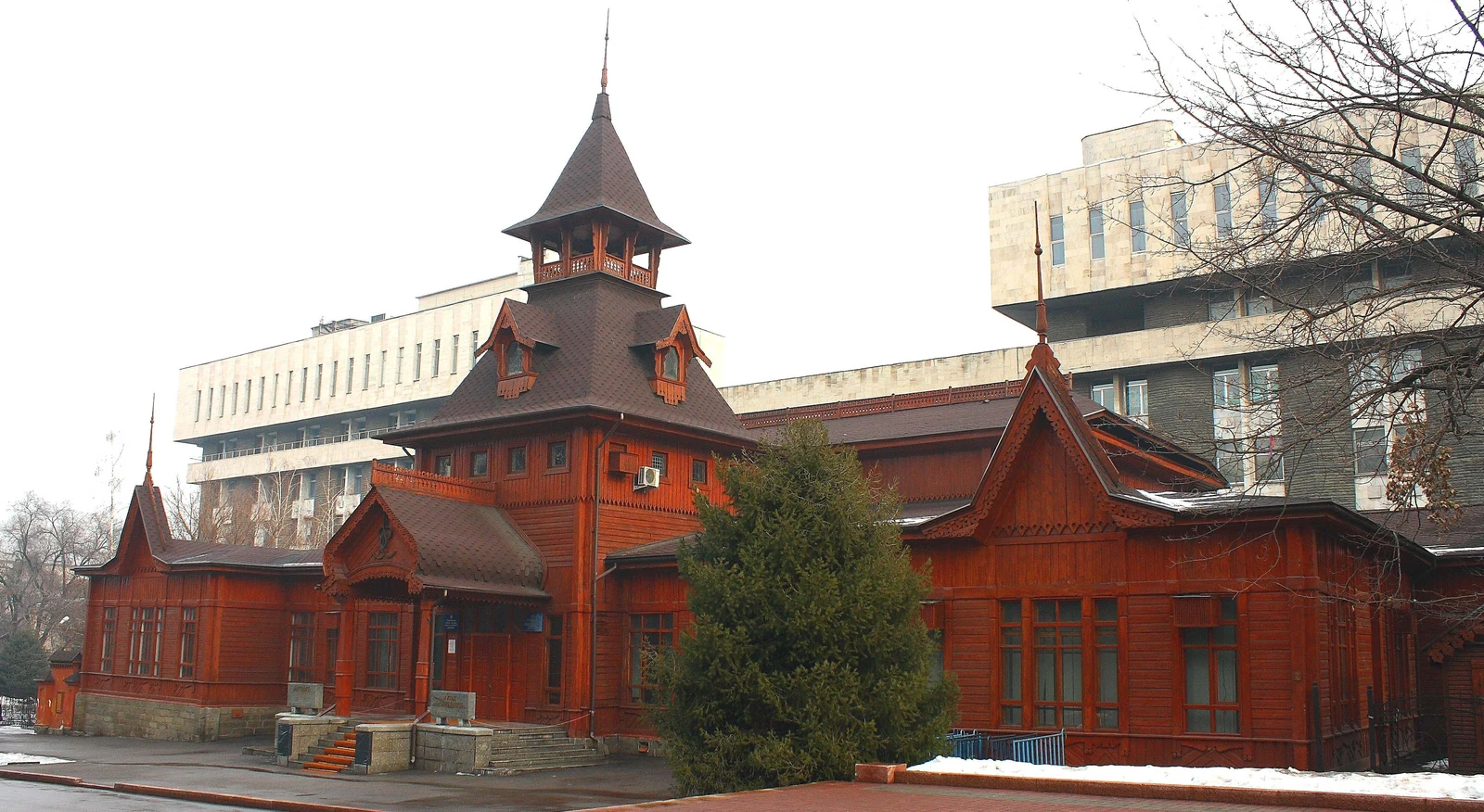
The Ykhlas Museum of Folk Musical Instruments, Zenkov Street 24a, is about 470 metres away on foot. Its wooden exterior makes a different subject from the cathedral. A visitor account published in October 2026 describes arriving with a guide after a city walk and taking particular interest in the kobyz room. Leave time for the instruments as well as the building.
A museum from the start? The central tower and carved eaves are visible in the photograph at the beginning of this article. But the building had another life before the instruments: local historian Nelya Buketova’s account describes a military assembly building used as a club, including performances and city gatherings. Today’s museum and the building’s original purpose are two different chapters.
Use the museum’s visitor page to arrange your own visit. Its published closing times conflict, so confirm opening and last entry for your date at +7 (727) 272-43-21.
You can finish the park walk here. For another wooden facade, continue to the Shakhvorostov house; choose the western museum pair as a separate continuation, not the next neighbouring stop.
A merchant’s facade beyond the park
What has changed? At the Shakhvorostov house at 99 Nazarbayev Avenue, look for the contrast between the high stone base and the carved wooden details. A 28 October 2026 report describes a refreshed facade and the removal of a metal fence. The changed street view is part of this house’s story; it does not establish that every detail is original. Offices occupy the house, so plan this as a street-side architectural stop.
At the next old house, separate what you can see from what needs a source: you can notice carving from the pavement, but a facade alone cannot tell you a detail’s age or the building’s former purpose. This way of looking works without a camera, too.
If an older plan sends you to Kyzyl-Tan at 63 Zhibek Zholy / 45 Ualikhanov for fabric shopping, check its status before making the detour. A September 2026 report described preparations and fencing for restoration, with an opening targeted for early 2027. That is a plan, not a confirmed reopening or an unobstructed facade for your shoot.
A separate western continuation: two buildings, one museum visit
The turquoise house occupied by the Museum of Sports and Olympic Glory at 551 Seifullin Avenue offers another kind of detail: carved window surrounds and wooden decoration. A recent reporter’s visit found that the museum remained in operation but unrestricted entry was not available. Enjoy the exterior; arrange any intended interior visit with the institution rather than relying on a walk-in.
From there, the Museum of Almaty at 132 Kabanbay Batyr is about 610 metres on foot. The former orphanage building lets you connect the old architecture with the city’s history inside. For a closer look at building history, the museum catalogue describes a Verny-period hall with woodwork, documents and material on Andrei Zenkov’s engineering. That is a reason to choose this optional indoor stop, not a guarantee that a particular item will be on display during your visit. Check the museum’s own visitor information before setting off; this is the city-history museum, not Almaty Museum of Arts. Our guide to another day in Almaty gives the practical visiting contact and other ways to spend the rest of the day.